
A conversation with a friend caused me to visit my beliefs about the role of research and data in public education. Data driven decisions about student learning and researched based instructional practices are on many teachers minds. I like this development. It helped me serve students in different ways. For example, teachers assumed that I needed to serve the lowest students from each class (about four students per class)--sounds fair and reasonable. But, what if one of the four kindergarten classes had a higher percentage of students in need? The data helped me explain to the other teachers that I did not need to see all of their "low" kids, because they preformed better on the developmentally appropriate assessments. The data provided me a clear list of students to see. But, what gets lost in the data. As the year developed, I found myself looking at numbers, charts, and spreadsheets. Enter a student to my room and hear my thoughts, "She's ranked in the 5th percentile in 1st grade. Or walking down the hallway, "Hi James--12th percentile." It is easy to get cold. I hate feeling cold and sterile, which caused me to think about inspiration and squelch. Squelch is defined by Wikipedia:
a
circuit function that acts to suppress the
audio (or
video)
output of a
receiver in the absence of a sufficiently strong desired
input signal .
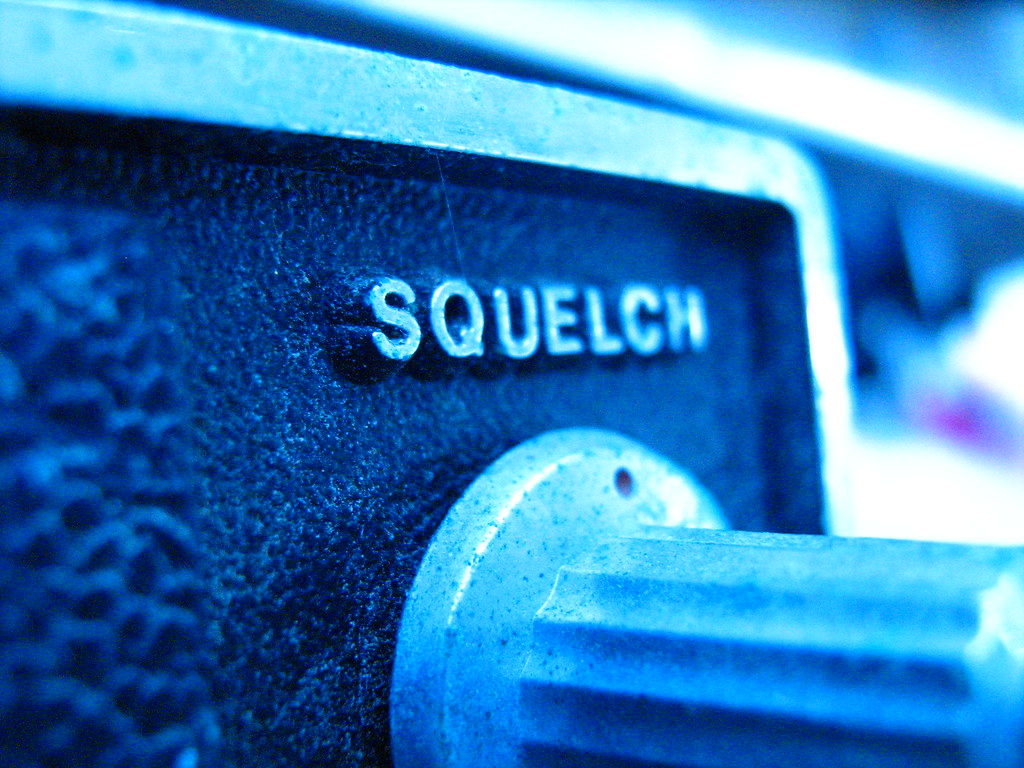
Scouts and CBsIn my long gone 1978 Scout 2, I had a CB with a 12 foot whip antenna. I used it to play with old truckers, talk with friends, and coordinate various social functions. Squelch was important--it filtered out the unwanted white noise or weak signals of other CB users. If I wanted to talk to someone close, I would turn the squelch up. If I was stuck in the mud, in the middle of the forest, I would turn it down to allow me to hear distance replies to my calls for help. The line between hearing too much and too little was sometimes hard to find.
Education and SquelchWhat is squelch in public education? I not sure yet. The squelch is difficult to find. Take reading for example, there is research that "proves" that direct instruction impacts student learning more than any other method and research that "proves" cooperative learning does the same. A reading program recently broke my squelch. One teacher said, "I could teach a rock to read with this program. Its just boring for students and the teacher. If you want it I'm sure we could find it--I am sure a lot of districts have it in their storage closets." Really--rocks to read? Are we teaching rocks? How do I adjust my squelch to hear what she really said. Maybe it would have sound like this, "We have a lot of kids who need help in reading--I am willing to try whatever it takes to help them." Did she say that? I don't know, but hope so. My squelch wasn't adjusted properly when she said that to me, so I responded, "That program doesn't align to my philosophy, so I'll try something else." I lost an opportunity. Not to use the program, but to collaborate and find multiple solutions to a complicated problem.
TensionThe tension must continue--I don't want to find balance, but the squelch. What should I use to filter daily conversations about data and research? What is the role of inspiration--teachers creating and solving specific problems that are unique to their populations? Using squelch requires that we keep our hands on the dials of our minds, ready to adjust on a moments notice--ready to hear what we need.
 What is School?


 Posts
Posts


